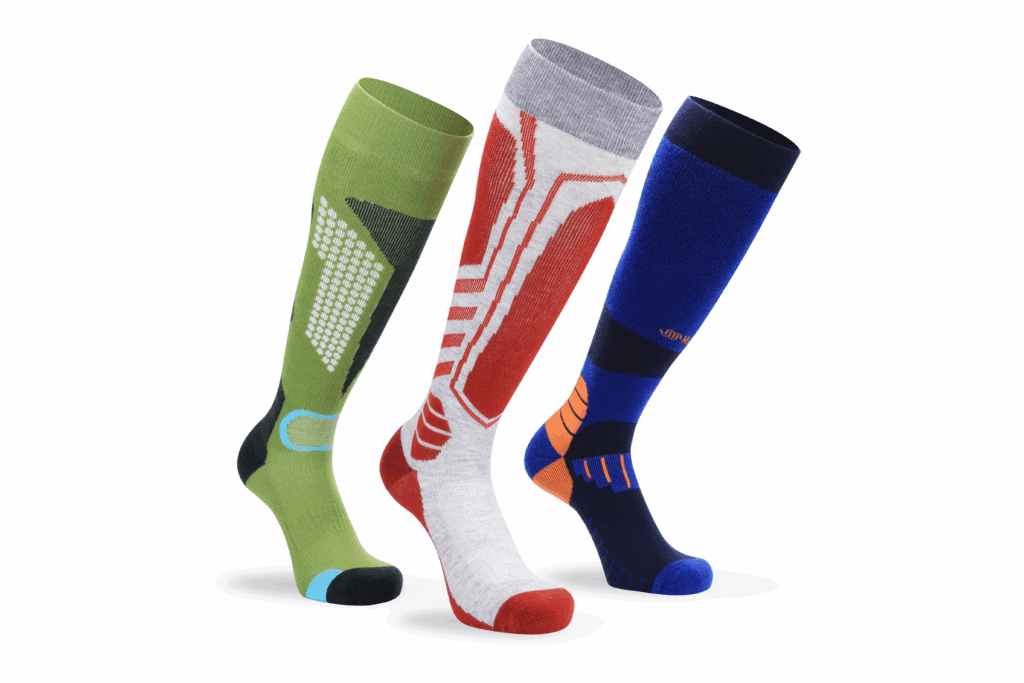
Selecting the right ski socks might seem straightforward, but not all socks are created equal. The wrong choice can lead to discomfort, cold feet, or even injury. Use this guide to make an informed decision and keep your feet happy all season long.
- Material Matters
Look for socks made from moisture-wicking and breathable materials. Merino wool is a top choice—it’s soft, warm, and resists odors. Synthetic blends incorporating nylon, polyester, and elastane are also common for their durability, stretch, and quick-drying properties. Avoid cotton—it traps moisture and will make your feet cold. - Cushioning Where You Need It
Ski socks should provide padding in high-impact areas like the shin and foot but remain thin around the ankles and instep. Too much bulk can affect how your boots fit, reducing responsiveness. Choose light, medium, or heavy cushioning based on your preference and the type of skiing you do. - Height and Fit
Most ski socks come in knee-high or calf-length designs. Knee-high socks offer extra warmth and protection against boot rub, while shorter styles provide more freedom for movement. Ensure the socks fit snugly without being overly tight. Compression elements can aid circulation without restricting blood flow. - Seamless Construction
To prevent blisters and hot spots, look for socks with flat or invisible seams. Many premium ski socks are woven seamlessly to reduce friction and improve comfort. - Temperature Rating
Some brands offer socks designed for specific temperature ranges. If you often ski in extreme cold, consider thermal-lined socks. For spring skiing or warmer conditions, lightweight and breathable options are better. - Brand Reputation
Trusted brands like Smartwool, Darn Tough, Bridgedale, and Heat Holders are known for quality and performance. Read user reviews to gauge real-world comfort and durability. - Don’t Overlayer
Wearing multiple pairs of socks might seem like a good idea for extra warmth, but it usually leads to reduced circulation and colder feet. One well-fitting, technical pair of ski socks is all you need. - Care and Maintenance
Follow washing instructions carefully to maintain moisture-wicking and insulating properties. Air-drying is often recommended to extend the life of the socks.
Your ski socks are a small but essential part of your gear setup. Investing in the right pair will keep your feet dry, warm, and comfortable—so you can focus on the slopes, not your socks.